Richie is in 8th grade and attends general education classes.
His academic profile shows:
- average reading skills (decoding and comprehension)
- below-average math skills
In math class, the expectations are clear.
When the bell rings, students:
- sit down
- take out their materials
- listen to instruction
- begin practicing
Richie struggles in this setting.
Instead of settling into the task, he:
- kicks or pokes other students
- disrupts the classroom
- ignores or does not respond to adult direction
- sometimes runs out of the room and hides
When asked afterward why this happens, he has difficulty explaining.
Understanding Response Inhibition
Response inhibition is the ability to pause before acting.
It is what allows a person to:
- feel an impulse
- hold that impulse
- choose whether or how to act
The word inhibition means to hold back.
In this context, it does not mean suppression in a negative sense.
It means having enough internal structure to not act immediately on every urge.
How This Skill Develops
Response inhibition begins to emerge early—around 7 months of age—and develops gradually over time.
It is not fully mature in childhood.
Adolescence, in particular, is a period where:
- emotional intensity increases
- impulses are stronger
- the ability to suppress reactions is still developing
Even typically developing teens may struggle to pause “in the heat of the moment.”
As the brain matures, most adults develop a greater capacity to:
- tolerate internal tension
- delay action
- respond more deliberately
When Response Inhibition Is Weak
When response inhibition is underdeveloped, behavior often looks like:
- acting quickly without thinking
- difficulty stopping once an action begins
- impulsive reactions to frustration, boredom, or stress
- leaving situations instead of staying within them
A key principle:
Anyone can look “dysregulated” when the demands of the environment exceed their capacity to respond adaptively.
In Richie’s case, the classroom places demands on him that he currently does not have the internal structure to meet.
So the energy does not get contained.
It gets expressed.
Containment: The Missing Capacity
At a deeper level, this is not just about behavior.
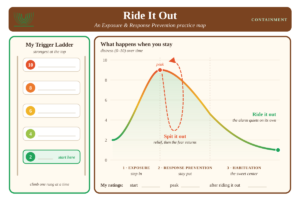
It is about containment—the ability to hold an internal experience without immediately discharging it.
For Richie, that might include:
- boredom
- frustration
- confusion
- restlessness
Without sufficient containment, these internal states move quickly into action.
Reflection Questions
- Think of a time when you felt the urge to act but were able to stop yourself.
What made that possible? - What kinds of situations make it harder for you to pause before acting?
- How does impulse control differ between:
- a young child
- a teenager
- an adult?
- What kinds of structures (internal or external) help people inhibit impulsive behavior?
- What conditions or diagnoses might affect response inhibition?
- What kinds of interventions might support someone like Richie?
- Have you experienced interventions that helped—or made it harder—to pause before reacting?
Closing Thought
Response inhibition is often judged as a matter of discipline.
In reality, it is a developmental capacity—one that depends on the brain, the environment, and the level of support available.